
Last updated: July 2026
by Jess Knauf, Director of Client Strategy at Mediate UK. Reviewed by Belinda Atkins, Managing Director, Family Legal Ltd. This blog is written in accordance with our editorial standards. Information is current as of 14 July 2026.
Key Takeaways
- Yes, you can apply to court and mediate at the same time. This is often called the two-pronged approach, and nothing in the rules prevents it.
- Since 29 April 2024 the rules have changed, and the approach carries risks it did not carry before. The court can pause your case to push you towards mediation, and can order you to pay the other side’s costs if you did not engage without a good reason.
- Attending a MIAM on its own does not count as trying mediation on Form FM5. Only joint sessions and other forms of non-court dispute resolution do.
- Court fees are not refundable if you settle. As of July 2026 a C100 costs £270 and a contested financial application on Form A costs £321.
- The two-pronged approach works best when you genuinely mediate alongside the application, rather than using the application as a threat.
THE TWO-PRONGED APPROACH
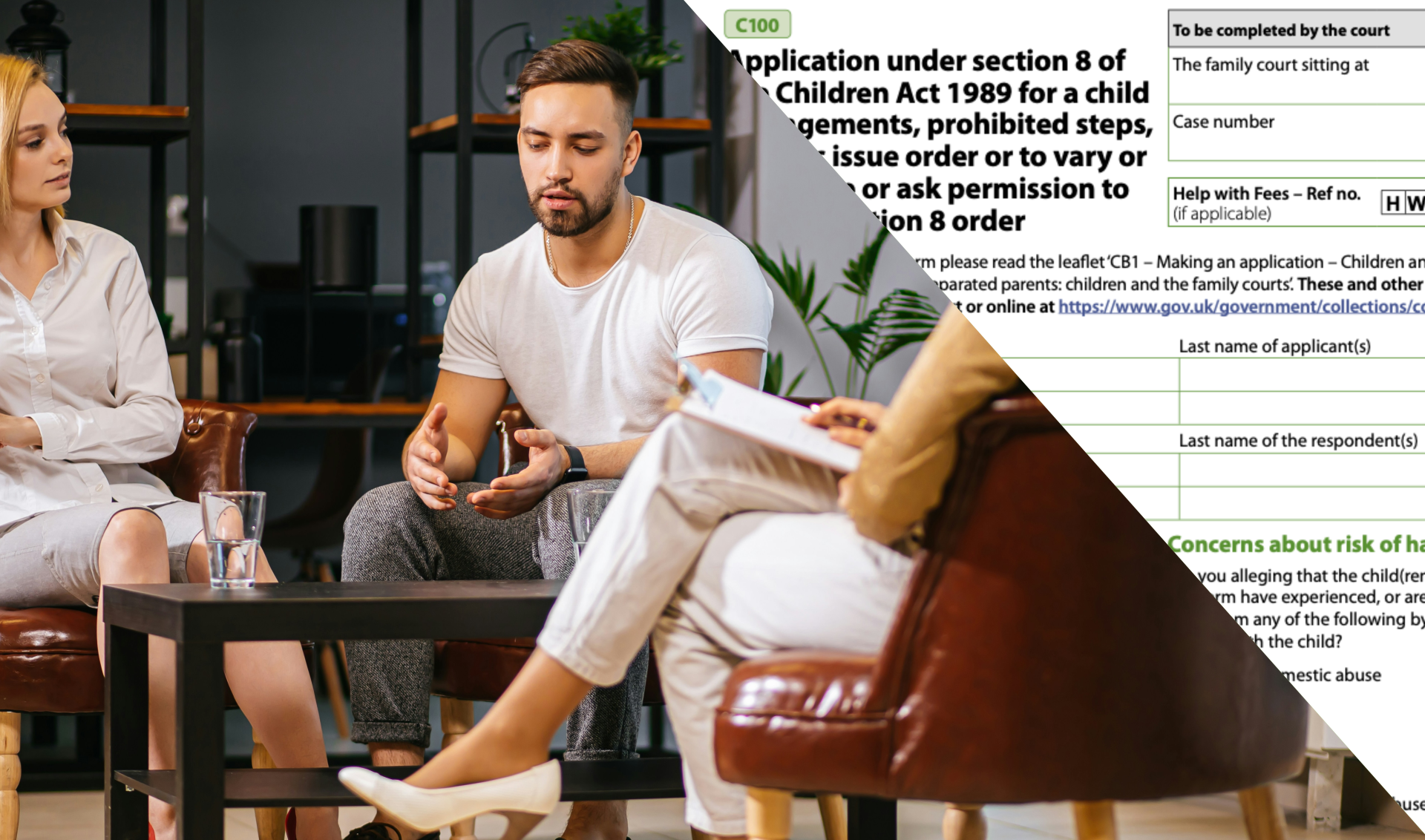
The two-pronged approach means applying to the family court while continuing with family mediation at the same time, so that a court date is already in the diary if mediation does not produce an agreement. It is allowed in England and Wales, and it can save months. Since April 2024, though, the court expects to see a genuine attempt at mediation, and it can pause your case or make a costs order against you if it does not.
If you are weighing up whether to apply to court and mediate at the same time, you are asking a sensible question. The two-pronged approach has been common advice for years: file the application, keep mediating, and if mediation fails you have not lost three months waiting for a hearing date. The logic is sound. What has changed is the rules around it.
On 29 April 2024 the Family Procedure Rules were rewritten to push families away from the courtroom and towards non-court dispute resolution. The court now has a duty to consider mediation at every stage, a power to pause proceedings without your agreement, and a costs power it did not have before. A tactic designed to save you time can now cost you time, if you get it wrong.
This guide explains what the two-pronged approach actually involves in 2026, what it costs, when it makes sense, when it backfires, and how to do it in a way the court will respect.
What Is the Two-Pronged Approach in Family Law?
The two-pronged approach is running two processes in parallel. You issue a court application, and you carry on with family mediation at the same time, rather than treating them as an either or choice.
It applies to both kinds of family dispute:
- Children: you apply for a child arrangements order on a C100 form and keep mediating about where the children live and when they see each parent.
- Finances: you apply for a financial order on a Form A and keep mediating about the house, the pensions and the savings.
In both cases you still have to attend a Mediation Information and Assessment Meeting first. A MIAM is a one-to-one meeting with a mediator that is a legal requirement before most family court applications, unless an exemption applies. So mediation is not an optional extra bolted onto the court route. It is the doorway to it.
Can You Apply to Court and Do Mediation at the Same Time?
Yes. There is no rule that stops you mediating once an application has been issued, and judges actively encourage it. Many cases settle after the application has gone in, sometimes on the morning of the first hearing itself.
The usual reason people do it is time. Court is slow. In children cases the first hearing, the FHDRA, is normally listed around five to six weeks after the C100 is issued, though busier courts take longer. Getting to the end is slower still. Ministry of Justice figures show private law children cases took an average of 41 weeks from application to final order in January to March 2025. If mediation collapses and you are only then starting the court process, you are adding months to an already long wait.
Filing while you mediate removes that gap. If you reach agreement, you stop the court case. If you do not, the hearing is already in the diary.
Has the Two-Pronged Approach Become Riskier Since April 2024?
It has, and this is the part most articles on this subject have not caught up with. The changes to Part 3 of the Family Procedure Rules that came into force on 29 April 2024 mean the court is no longer a neutral bystander on the question of mediation. Three things changed that matter directly to anyone using the two-pronged approach.
Does a MIAM Count as Trying Mediation on Form FM5?
No, and this catches people out. Both of you now have to file a Form FM5, a statement of your position on non-court dispute resolution, at least seven days before the first hearing. You can download it from the official GOV.UK page.
The form asks whether you have attended non-court dispute resolution, and if you have not, why you are asking a judge to decide instead. Attending a MIAM on your own does not answer that question. Only joint mediation sessions, arbitration, collaborative law or a private neutral evaluation count. Someone who ticks the MIAM box, files the C100 and then does nothing else arrives at the first hearing with an FM5 that says, in effect, we did not try. That is a weak place to stand.
Can the Court Pause Your Case to Make You Try Mediation?
Yes. Before April 2024 the court could only adjourn for mediation if both of you agreed. That requirement has gone. The court can now adjourn proceedings to encourage you to try non-court dispute resolution whether you want to or not, provided the timetable allows for it.
This is not theoretical. In NA v LA [2024] EWFC 113 a deputy High Court judge called it a paradigm case for the new powers and stayed a wife’s financial application so the couple could attempt mediation, even though her lawyers argued a stay was premature. The judge also made the point that you do not need to complete financial disclosure before you start mediating, because the mediation process gathers it as you go.
So the very thing the two-pronged approach is designed to avoid, delay, is now something the court can impose on you if it thinks you rushed to litigate.
Could You Be Ordered to Pay Costs?
In financial cases, yes. The rules on costs were amended at the same time. When deciding whether to make a costs order against a party, the court must now have regard to any failure, without good reason, to attend a MIAM or to attend non-court dispute resolution. That applies to applicants and respondents equally, so it cuts both ways.
None of this means you cannot apply to court while mediating. It means the two-pronged approach only works if the mediation prong is real.
“We see two very different versions of the two-pronged approach. One is a parent who is genuinely mediating and simply does not want to lose six months if it does not work. The other is someone using the application as leverage in the room. Judges can tell the difference, and since the 2024 rule changes so can the paperwork. Our advice is always the same: if you are going to file, tell your mediator and tell your ex before you do it, and keep turning up to the sessions.”
Jess Knauf, Director of Client Strategy, Mediate UK
How Much Does It Cost to Apply to Court in 2026?
Court fees rose on 13 July 2026. If you are running both routes at once, you are paying for both, and the court fee is not returned to you if you settle in mediation and withdraw. These are the fees as of July 2026:
| Application | Court fee from 13 July 2026 |
| Child arrangements order (C100) | £270 |
| Contested financial order (Form A) | £321 |
| Financial order by consent (a consent order) | £62 |
| Divorce, dissolution or nullity | £628 |
Fees are set by the Ministry of Justice and were uplifted on 13 July 2026. Two points worth being clear about. The consent order fee of £62 is a completely different fee from the £321 contested financial application, and it is the one most mediation clients end up paying. And if money is tight, you may be able to get some or all of the fee waived through Help with Fees.
On the mediation side, a MIAM at Mediate UK is £138 including VAT per person, and our full price list is on the costs and payments page. If your case involves arrangements for children you may also be eligible for the government’s £500 family mediation voucher, which is not means-tested.
Thinking of filing, but not sure whether to mediate first?
A MIAM is the legal first step either way, so it is never wasted. Most of ours are held online and we can often see you within 48 hours.
When Does the Two-Pronged Approach Actually Make Sense?
There are four situations where filing alongside mediation is a reasonable, defensible decision:
- Your ex is unlikely to engage: if they have already ignored an invitation to mediate, the court application may be the only thing that gets a response.
- There is a deadline you cannot move: a school place, a house sale, a holiday that has already been booked.
- Mediation is running but wobbling: sessions are happening, agreement looks unlikely, and you would rather not restart the clock from zero.
- Money is at risk: assets are being moved or hidden and you need the court’s protective powers, not just a conversation.
The common thread is that the court application is doing a job that mediation cannot do, rather than duplicating a job mediation is already doing perfectly well.
When Is It a Bad Idea?
Filing is usually the wrong call when mediation has not really started yet, when nothing about the case is urgent, or when the real motive is to put pressure on the other person. Applying to court to make a point tends to have three effects: it hardens the other side, it produces an FM5 you would rather not have to write, and it spends a non-refundable fee on a hearing you may never need.
It is also worth understanding what happens if mediation genuinely does not work. Our guide on what to do if mediation breaks down sets out the options, and going straight to court is only one of them.
Family Law Service
Need Help Completing Your C100?
If you have decided to apply while you carry on mediating, the application still needs to be right first time. Our sister company can complete and check your C100 for a fixed fee, so a form error does not cost you weeks.
How Do You Run Both Routes Properly, Step by Step?
Step 1: Attend Your MIAM and Invite the Other Person
Everything starts here, whichever route you end up on. At the MIAM the mediator explains your options, checks that mediation is safe and suitable, and writes to the other person inviting them in. If you later need the court form signed, they can do that too. Keep an eye on the clock: a MIAM certificate is only valid for four months, so a long mediation can mean going back for a fresh one.
Step 2: File the Application
A C100 for children, a Form A for finances. You can find the right court using the HMCTS court finder. Take your time over it, because a rejected form is exactly the delay you were trying to avoid. If you would rather not do it alone, our court form completion packages cover it.
Step 3: Tell Your Mediator and Tell Your Ex
This is the step people skip, and it is the one that decides whether the approach works. Mediation runs on trust. Someone who finds out mid-session that court papers were served last week will usually walk out, and you will have lost the prong that was most likely to succeed. Say it plainly and early: I have applied to protect the timetable, I would still much rather we sorted this out here.
Step 4: Keep Mediating, Properly
Turn up, make proposals, move. 90% of Mediate UK clients who completed joint mediation in 2025 reached full or partial agreement, and you can read how we calculate that figure here. Partial counts too. Even narrowing the argument down to one issue makes the hearing shorter and cheaper.
Step 5: File Your FM5 Seven Days Before the Hearing
If you have done steps one to four, this form writes itself. You attended, you engaged, and here is what is still in dispute. That is a far better position than explaining why you did nothing.
What Happens to the Court Case If You Agree in Mediation?
You do not have to see the case through. If you reach agreement while the application is live, you can ask the court to withdraw it, or ask for the agreement to be turned into an order and the case closed.
Which of those you want depends on what you have agreed:
- Financial agreements: these need a financial consent order to be binding and to give you a clean break. You do not normally need to attend court for one. A judge considers it on the papers.
- Arrangements for children: many parents are happy with a written parenting plan and no order at all. If you do want it made binding and proceedings are already running, the court can make a consent order, and in practice that often happens at the first hearing, which you would both attend.
Either way, the court fee you have already paid stays paid. That is the real cost of the second prong, and it is worth being honest with yourself about it before you file.
Case study: the application that never got used
A father came to us after four months of cancelled handovers. He had a MIAM booked and a C100 half completed. We suggested he tell the children’s mother he intended to apply, and why, before he filed. He did, she agreed to a first joint session, and he filed anyway to hold the timetable. They settled the summer holidays in session one and the term-time schedule in session two. He withdrew the application before the first hearing. He did not get the £270 back, and he told us it was the best £270 he had spent, because it was the thing that finally got both of them in the room. Details changed to protect confidentiality.
Summary
You can apply to the family court and mediate at the same time, and for some families the two-pronged approach is a sensible way to protect the timetable without giving up on agreement. It is most defensible when the application is doing something mediation cannot, such as forcing a response from someone who will not engage, or protecting assets.
What has changed since April 2024 is that the court now expects to see a genuine attempt at mediation, not a tick in a box. It can pause your case to make room for it and, in financial cases, it can make you pay costs if you did not engage without a good reason. Mediate, tell the truth about it on your FM5, and the two-pronged approach works. Use the application as a weapon, and it can cost you the thing you were trying to save.
Frequently Asked Questions
Can I skip mediation and go straight to court?
Only if a MIAM exemption applies, for example evidence of domestic abuse or a genuine emergency. Otherwise you must attend a MIAM before applying. Even with an exemption, the court can inquire into whether it was validly claimed and, if it decides it was not, direct you to attend a MIAM and adjourn your case.
Do I have to tell the court I am still mediating?
Yes, and you will want to. Form FM5 asks both of you to set out what non-court dispute resolution you have tried. Ongoing mediation is the answer you want to be able to give.
Is anything I say in mediation shown to the judge?
No. Mediation is confidential and legally privileged, so the discussions themselves cannot be put before the court. The exception is financial disclosure, which is provided on an open basis, and any safeguarding concern about a child.
Will I get my court fee back if we settle?
No. Once the application is issued the fee is spent, whether or not you reach a hearing. If paying it would be difficult, apply for Help with Fees before you file rather than after.
Can the judge order us to mediate?
Not quite. Mediation stays voluntary, so nobody can be forced into a session. What the court can do since April 2024 is adjourn your proceedings to encourage you to try it, without needing your agreement, and take any unreasonable refusal into account on costs.
How long after mediation can you go to court?
Your MIAM certificate is valid for four months. To apply to court you must have attended a MIAM, or had your last joint mediation session, within the four months immediately before the application. If longer has passed, you will need to go back to a mediator before you can file.
Does mediation still work once court papers are in?
Often, yes. Some couples only start negotiating seriously once a hearing date exists. The thing that damages it is not the application itself but finding out about it by surprise, which is why telling the other person first matters so much.
You Might Also Find Helpful
The Ultimate Guide to Child Arrangements Read the guide |
How Long Does a C100 Form Take? Find out more |
Financial Consent Orders Explained Learn more |
15 Exemptions to Attending a MIAM View the guide |
Ready to Take the Next Step?
Whether you are heading to court, hoping to avoid it, or doing both at once, a MIAM is where it starts. Book one now, or arrange a free call if you would like to talk your options through first.
Our Legal Partnerships
Mediate UK works closely with trusted legal professionals to ensure your agreements are legally robust. Our partners include
DFA Law LLP (agreements managed by SRA-regulated solicitor Rachel Adams, SRA 452750),
independent barristers at St Ives Chambers (including Charmian Jackson, registered with the Bar Standards Board),
and The Family Law Consultant (managed by SRA-regulated solicitor Rhiannon Compton, SRA 600560).
These legal professionals support our clients with consent orders, independent advice, and final barrister reviews.


